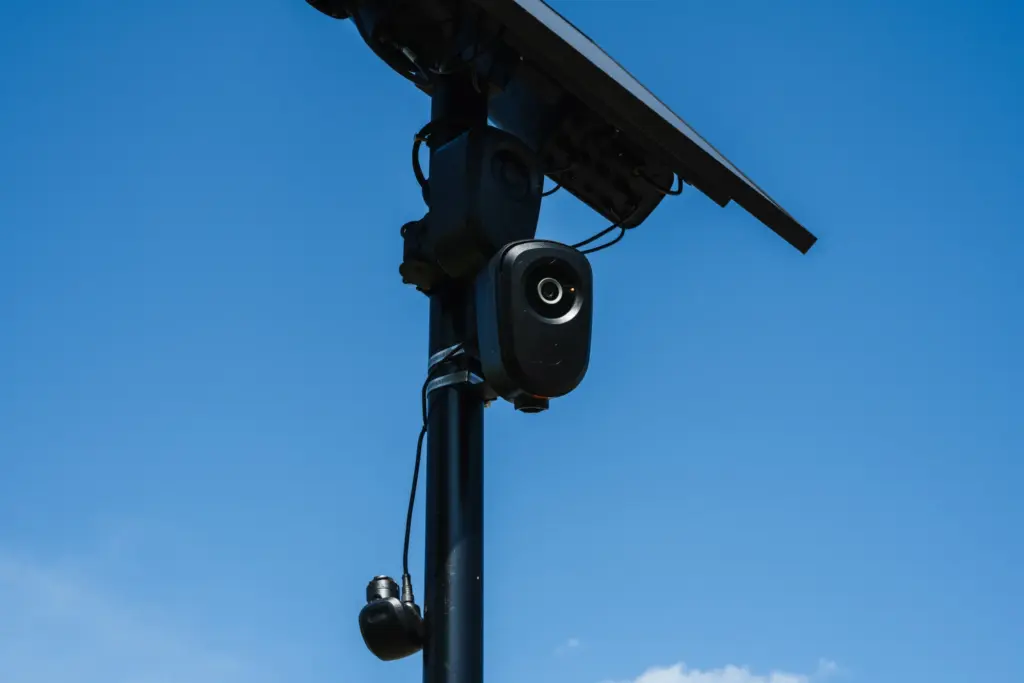
Flock Safety cameras are automatic license plate reader (ALPR) cameras used by thousands of law enforcement agencies, neighborhoods, schools, and businesses. They photograph passing vehicles and use AI to identify details such as license plate numbers, vehicle make, model, color, and distinctive features. They are designed to help investigate crimes, locate stolen vehicles, and identify suspect vehicles.
The technology has also become the subject of significant privacy and civil liberties debate.
Common privacy concerns:
- Mass collection of innocent drivers’ movements
- The cameras capture data on everyone who passes by, not just suspects.
- Critics argue this can create a detailed history of where people have traveled over time.
- Potential for government surveillance
- As networks expand across cities and states, police agencies can often search for data collected by many jurisdictions.
- Privacy advocates worry this enables broad tracking of people’s movements without individualized suspicion.
- Data retention
- Flock states that customer agencies control their own retention settings, subject to applicable laws and policies.
- Longer retention periods increase the amount of historical location data available for searches.
- Data sharing
- Agencies may choose to share data with neighboring agencies or regional networks.
- This can improve investigations but also expands who has access to collected information.
- AI errors
- While license plate recognition is generally accurate, it is not perfect.
- Misreads, dirty plates, poor lighting, or similar-looking vehicles can lead to false investigative leads.
Concerns about police abuse. Civil liberties organizations have identified several potential risks:
- Tracking political protests or demonstrations.
- Monitoring journalists or activists.
- Following individuals without obtaining a warrant.
- Using historical travel patterns to build profiles unrelated to a specific crime.
- Searching databases without a legitimate law enforcement purpose.
Whether these actions occur depends on agency policy, state law, auditing, and oversight.
Safeguards that agencies often use. Many departments have policies requiring:
- A documented law enforcement purpose for each search.
- User authentication and audit logs recording who searched the system.
- Supervisor review of suspicious searches.
- Criminal or disciplinary penalties for unauthorized access.
- Public transparency policies regarding camera locations and usage.
What supporters say: Supporters, including many police departments, argue the cameras have helped:
- Recover stolen vehicles.
- Identify suspects in violent crimes.
- Locate missing persons.
- Provide objective evidence when eyewitness descriptions are incomplete.
They also note that Flock cameras generally capture vehicles rather than continuously recording people or audio.
What critics say: Organizations such as the American Civil Liberties Union and the Electronic Frontier Foundation argue that:
- Widespread ALPR networks can enable persistent location surveillance.
- The absence of warrant requirements for many searches raises Fourth Amendment concerns.
- Stronger limits on retention, sharing, and auditing are needed to reduce the risk of misuse.
The central debate is not whether Flock cameras can solve crimes—they often do—but whether the scope of data collection and sharing creates opportunities for excessive surveillance or misuse. The risk of abuse depends heavily on local policies, state laws, oversight mechanisms, and whether agencies enforce meaningful accountability for improper searches.