By Gloria Way
Mid-July is the time of year when local school districts approve their student handbooks for the upcoming school year. So obviously, the three school districts in Chambers County, East Chambers ISD, Anahuac ISD, and Barbers Hill ISD, have their respective duly elected Board of Trustees, approve their 2026-2027 Student Handbook which includes the Student Code of Conduct.
Each school’s Student Code of Conduct states that the code of conduct is required by Chapter 37 of the Texas Education Code. Chapter 37 allegedly provides methods and options for managing student behavior, parenting, and intervening in student discipline problems, and imposing discipline. Chapter 37 of the Texas Education Code governs student discipline, law enforcement, and order in public schools. It mandates the creation of a local Student Code of Conduct, details teacher authority to remove disruptive students, and defines the rules for suspensions, expulsions, and Disciplinary Alternative Education Programs.
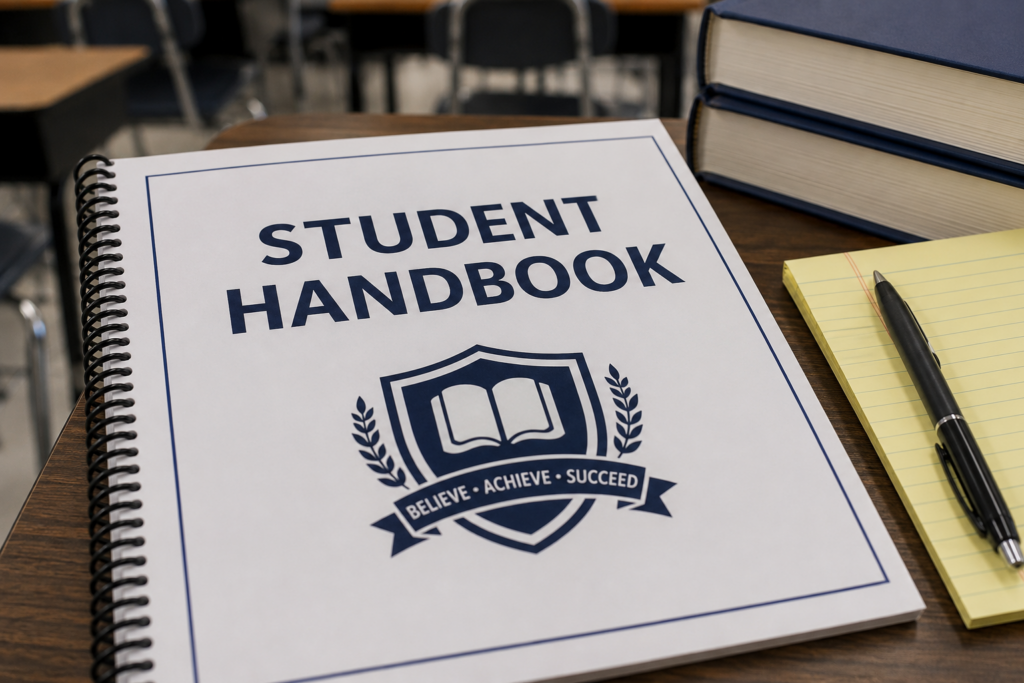
The Student Handbook is designed to align with law, board-adopted policy, and the Student Code of Conduct, a board-adopted document intended to promote school safety and an atmosphere for learning. The Student Handbook is not meant to be a complete statement of all policies, procedures, or rules in any given circumstance. In case of conflicts between board policy (including the Student Code of Conduct) and any Student Handbook provision, the district will follow board policy and the Student Code of Conduct.
A student handbook is an important document for every Independent School District (ISD) in Texas because it explains the district’s expectations, procedures, and student rights in a way that is easy for students and families to understand. While the student handbook does not replace official board policies, it serves as a practical guide for daily school life.
Here are the key reasons a student handbook is important:
- Communicates School Rules and Expectations:
- Explains standards for student behavior.
- Outlines attendance requirements, dress code, technology use, and academic expectations.
- Helps create a safe, orderly, and respectful learning environment.
- Informs Students and Parents of Their Rights and Responsibilities:
- Describes student rights regarding education, privacy, and due process.
- Explains parent rights, including access to records, communication with schools, and involvement in educational decisions.
- Encourages shared responsibility between students, parents, and school staff.
- Explains Discipline Procedures:
- Provides information about consequences for misconduct.
- Describes disciplinary options, including detention, suspension, and placement in alternative education programs when applicable.
- Promotes fairness by ensuring disciplinary expectations are communicated in advance.
- Supports Academic Success:
- Includes grading policies, graduation requirements, testing information, attendance expectations, and eligibility for extracurricular activities.
- Helps students understand what is required to succeed academically.
- Promotes Student Safety:
- Contains emergency procedures, health services information, bullying prevention policies, and reporting procedures.
- Explains how students can report safety concerns or seek assistance.
- Provides Information About School Services
- Describes counseling services, special education, gifted and talented programs, bilingual education, transportation, nutrition services, and extracurricular opportunities.
- Strengthens Communication:
- Serves as a common reference for students, parents, teachers, and administrators.
- Reduces misunderstandings by clearly documenting district procedures and expectations.
- Supports Compliance with Texas Law:
- Helps ISDs communicate requirements established by the Texas Education Agency and the Texas Legislature.
- Reflects district policies adopted by the local school board and applicable provisions of the Texas Education Code.
A student handbook is an essential resource for Texas ISDs because it promotes consistency, transparency, safety, and academic success. By clearly explaining district policies, student expectations, and available resources, it helps students and families understand how the school operates and supports a positive educational environment. Although the handbook is an important guide, official school board policies and state and federal laws take precedence if there is any conflict.
Every parent or guardian of a student enrolled in a public school must be aware of what the expectations are of the student. Every ISD has the student handbook online. If you cannot download the handbook or do not have a computer, ask the school administration to give you a hard copy.
It also must be remembered that the student handbook is written according to state and federal law and its school board policies. School board policies can be changed according to the makeup of the individual school board, so it is important to read the student handbook every year.